
ψ
15
Loading
MathPhys · Tashkent · 2026
The Regional Conference on Mathematical Physics has met since 1984, rotating between Turkey, Iran, Pakistan, Armenia and Georgia. The 15th edition is the first to be held in Central Asia.
2026 marks one hundred years since the birth of Professor Abdus Salam — Nobel Laureate, founder of ICTP, and a lifelong advocate for theoretical physics in the developing world. His conviction that scientific excellence knows no borders led directly to the creation of the Institute of Theoretical Physics in Tashkent, which began full operation in January 2026. Dedicating the 15th conference to his centenary is, for this community, a matter of gratitude.
The conference also celebrates the 80th birthday of Professor Asghar Qadir, a pillar of mathematical physics in the region and a presence in this series almost from its beginning.
1926 — 2026
2026 marks one hundred years since the birth of Professor Abdus Salam — Nobel Laureate, founder of ICTP, and a lifelong advocate for theoretical physics in the developing world. His conviction that scientific excellence knows no borders led directly to the creation of the Institute of Theoretical Physics in Tashkent, which began full operation in January 2026. Dedicating the 15th conference to his centenary is, for this community, a matter of gratitude.
The conference also celebrates the 80th birthday of Professor Asghar Qadir, a pillar of mathematical physics in the region and a presence in this series almost from its beginning.
The first meeting, arranged by a group of physicists from Iran and Turkey who had met at ICTP in Trieste.
Fifteen meetings across six countries. Two editions carry the names of colleagues the series lost.
The first meeting, arranged by a group of physicists from Iran and Turkey who had met at ICTP in Trieste.
The first edition officially called a Regional Conference, after Pakistan joined the rotation.
The region widens beyond the original three countries.
The first edition held in Central Asia.
Mathematical methods in physics, operator theory, spectral analysis, phase transitions, lattice models, non-equilibrium dynamics, large deviations.
The programme is advanced in level, bringing together invited experts, selected contributed talks, and postgraduate researchers.
Mathematical methods in physics, operator theory, spectral analysis, phase transitions, lattice models, non-equilibrium dynamics, large deviations.
Quantum many-body systems, nonlinear dynamics, topological phases, topological insulators, quantum Hall systems, strongly correlated matter, many-body localization.
Quantum mechanics, quantum field theory, gauge theories, conformal field theory, anomalies, scattering theory, exactly-solvable models, Bethe ansatz, integrable systems.
General relativity, Einstein equations, black holes, gravitational physics, relativistic astrophysics, astronomy, cosmology, holography, compact objects, high-energy astrophysics.
Particle physics, nuclear structure and dynamics, quantum chromodynamics, nuclear matter, fundamental interactions, particle phenomenology, mathematical aspects of high-energy and nuclear physics.
Numerical methods, computational physics, numerical relativity, Monte Carlo methods, tensor networks, high-performance computing, machine learning and AI for physics.
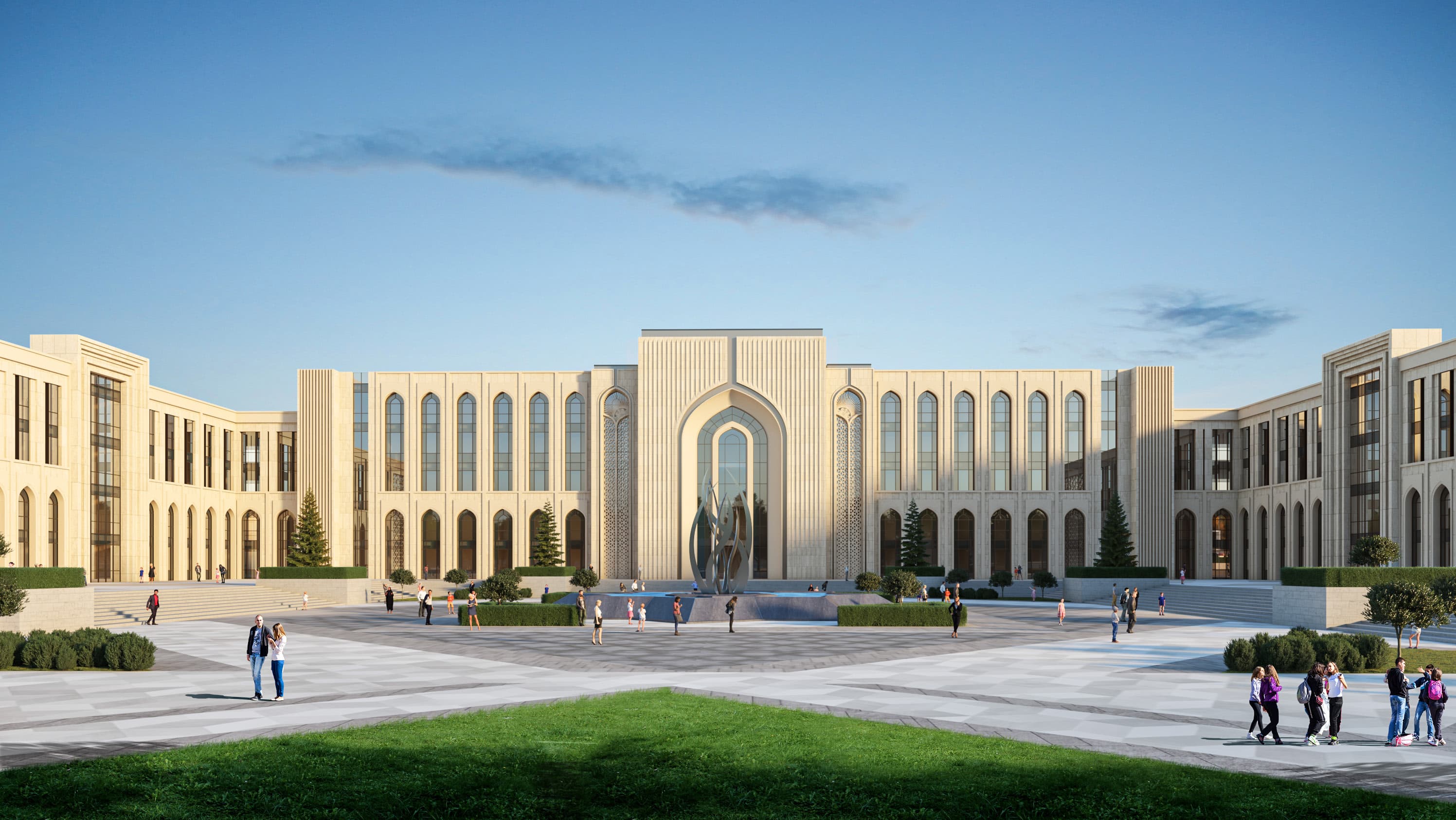
The Institute of Theoretical Physics was established at the National University of Uzbekistan on the initiative of this conference's organisers, with the support of the Uzbek government, and has been fully operating since January 2026. This is the first conference it organises — intended as the first of many, and as a step toward making Tashkent a working centre for theoretical physics in Central Asia.
Two continuing activities grow out of the meeting: a Conference and Contest of Young Scientists on Modern Problems of Theoretical Physics, and a standing seminar series on theoretical and mathematical physics.
The Institute of Theoretical Physics was established at the National University of Uzbekistan on the initiative of this conference's organisers, with the support of the Uzbek government, and has been fully operating since January 2026. This is the first conference it organises — intended as the first of many, and as a step toward making Tashkent a working centre for theoretical physics in Central Asia.
Two continuing activities grow out of the meeting: a Conference and Contest of Young Scientists on Modern Problems of Theoretical Physics, and a standing seminar series on theoretical and mathematical physics.
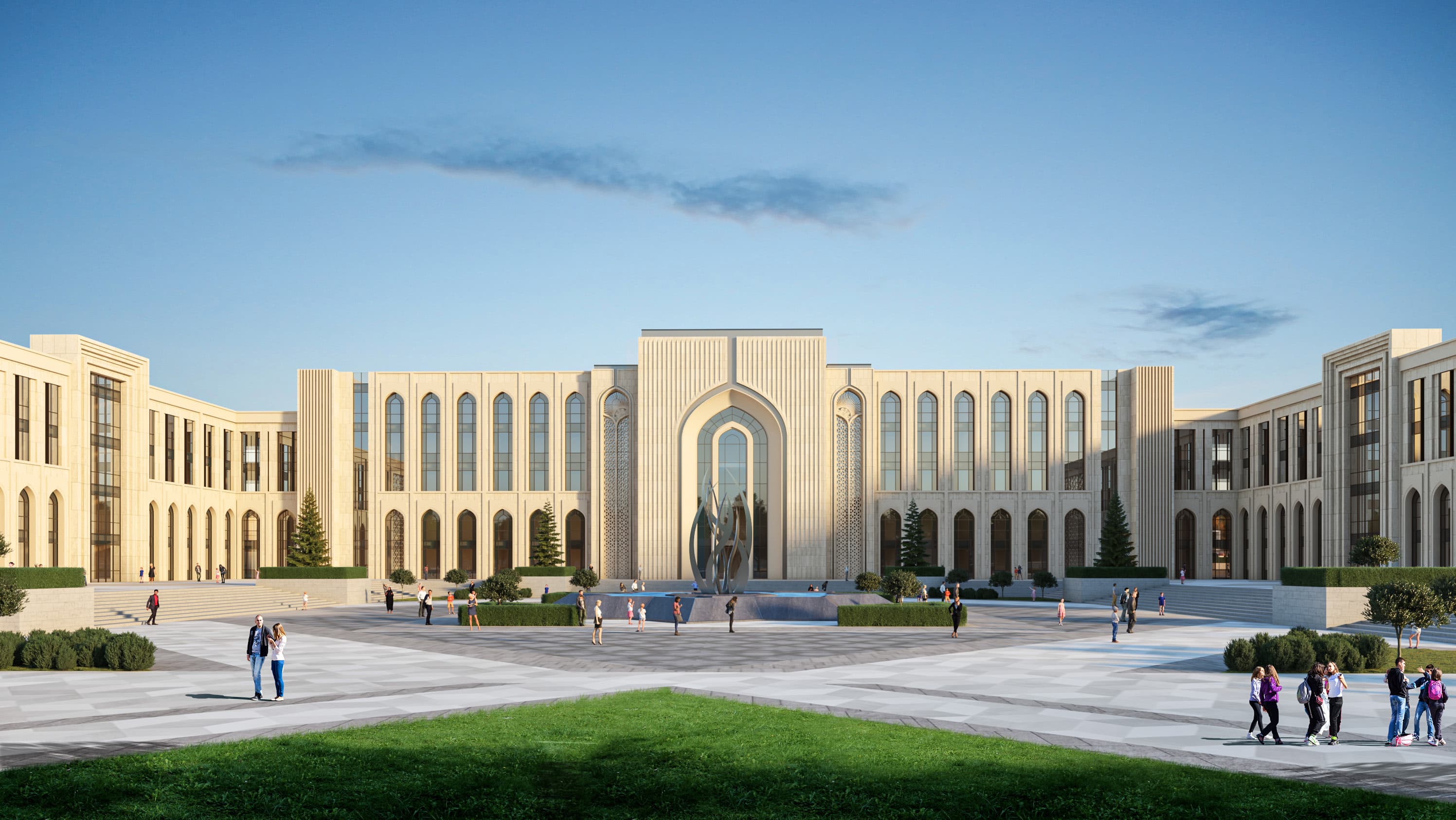
Tashkent has been a centre of mathematics and astronomy since the era of al-Khwarizmi and Ulugh Beg. Today it hosts a growing community of theoretical physicists and a notably young generation of researchers.
Holding the conference here brings that community into direct contact with the international network the series has built over four decades — senior figures alongside emerging ones, with time set aside for the conversations that do not fit into a lecture.
Tashkent has been a centre of mathematics and astronomy since the era of al-Khwarizmi and Ulugh Beg. Today it hosts a growing community of theoretical physicists and a notably young generation of researchers.
Holding the conference here brings that community into direct contact with the international network the series has built over four decades — senior figures alongside emerging ones, with time set aside for the conversations that do not fit into a lecture.